
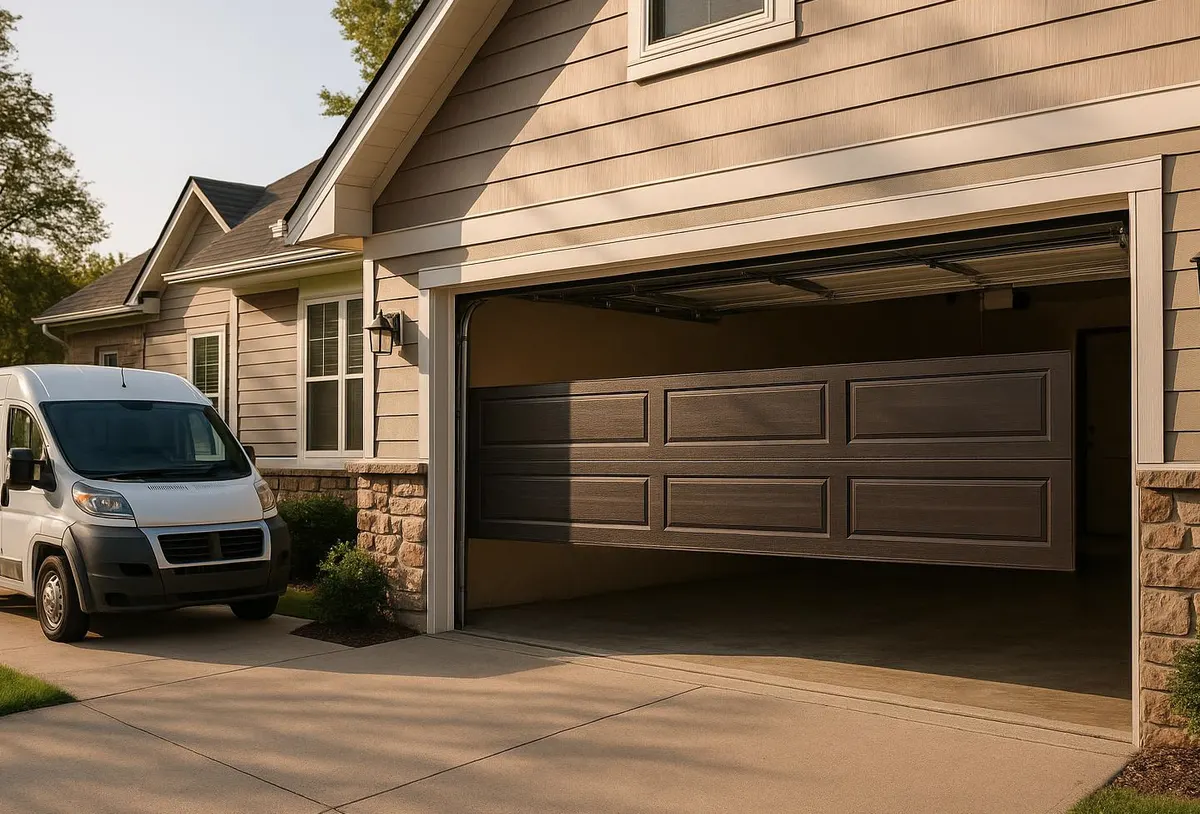
You're backing out of the garage on your way to work, coffee in hand, and the door makes a sound it's never made before. Maybe it's a grinding noise as the panels lift, a sharp squeal partway up, a loud pop that makes you flinch, or a steady rattle the whole way. You pause, listen again, and wonder if it's something you can ignore until the weekend. Some of these noises can wait a few days. Others are your door telling you it's about to fail at the worst possible moment — usually right before you need to leave the house or button things up ahead of a storm.
Here's how to read each sound, in the order a technician would actually check things once they're standing in front of your door.
Grinding: Something Is Fighting the Track
Grinding usually sounds like metal scraping metal, and it often gets worse as the door moves rather than staying constant. A technician checks these in order:
- Rollers first. Steel rollers that have lost their lubrication or developed flat spots will grind as they turn in the track. This is common in homes where the door sees daily use in Florida's humidity, since moisture speeds up wear on metal parts that aren't sealed.
- Track alignment second. If the rollers look fine, the track itself may have shifted slightly out of parallel, which forces the rollers to grind against the rail edge instead of rolling smoothly inside it.
- Bearings last. Worn bearings inside the rollers or at the spring ends can grind under load, especially on doors that are a few years old and haven't had a tune-up.
The fix depends on what's worn. Lubricating rollers is a five-minute job, but if they're pitted or cracked, replacement is the real fix — and this is a good moment to consider upgrading to nylon rollers, which run quieter and hold up better against rust than steel. Track realignment is a hands-on adjustment that shouldn't be attempted without the right tools, since a misaligned track under tension can bind or jump.
Squealing: Almost Always Friction
Squealing is a higher-pitched, often intermittent sound, and it's the noise most directly tied to lubrication.
- Dry rollers and hinges are the first suspect. Garage doors need lubrication every few months, and that interval shortens in Brandon's climate, where humidity and afternoon downpours wash grease off exposed hardware faster than in drier regions.
- Spring friction is next. If lubricating the rollers and hinges doesn't quiet things down, the squeal may be coming from the torsion spring itself rubbing against its shaft or mounting bracket.
- Worn rollers again. Like grinding, persistent squealing even after lubrication often means the rollers themselves need replacing, not just oiling.
The fix for most squealing is a proper lubrication pass using a silicone-based or garage-door-specific lubricant — not WD-40, which evaporates quickly and attracts dust. If the squeal is coming from the spring, that's not a DIY lubrication job; springs are under heavy tension and should only be serviced by someone trained to handle them safely.
Popping: Usually a Spring or a Track Issue
Popping is sudden and often loud enough to make you jump. It's one of the sounds worth taking seriously right away.
- Spring tension is checked first. A popping sound during opening or closing can mean a torsion spring is slipping on its winding cone or starting to fail. This is especially common after years of temperature swings and humidity cycling, which stress metal springs over time.
- Track separation is checked next. If sections of track have come loose from the wall brackets — sometimes from age, sometimes from a door that's been forced through resistance — the door can pop as it hits the gap.
- Panel flex is checked last. On older steel doors, especially ones that have taken on moisture and started to warp slightly, panels can pop as they flex against the track during operation.
If the cause is spring-related, this isn't a wait-and-see noise. A spring that's slipping or showing early signs of failure can snap without warning, and a door with a broken spring becomes extremely heavy and difficult to control safely. Track separation also needs prompt attention, since a door running on a partially detached track can jump off entirely.
Rattling: Loose Hardware, Loose Chain, or Both
Rattling tends to happen throughout the door's full range of motion rather than at one specific point.
- Hardware is checked first. Bolts, hinges, and bracket fasteners work loose over time, especially with the vibration of daily opening and closing. This is a quick check and an easy tighten in most cases.
- Chain or belt tension is checked next on doors with chain-drive or belt-drive openers. A chain that's sagged out of proper tension will slap against the rail and rattle with every cycle.
- Roller wear is checked last, since loose or worn rollers rattling inside the track can sound similar to loose hardware from a distance.
Tightening hardware is straightforward, but chain tension adjustments should match the opener manufacturer's spec — too tight strains the motor, too loose causes the same rattle you're trying to fix. On older openers, this is also a natural point to evaluate whether an upgrade makes sense, particularly if you're dealing with recurring issues on a unit that's outlived its expected lifespan.
When to Call Brandon Garage Door Service
If lubrication doesn't quiet a squeal, if a popping sound shows up more than once, or if you're hearing grinding that's gotten louder over a week or two, it's time to have someone look at it before the issue turns into a stuck door or a stranded car. Our technicians diagnose the noise on-site, starting with the same checks outlined above, and handle everything from Cable & Roller Replacement to full Garage Door Spring Repair when a spring is the culprit. We also offer Garage Door Maintenance & Tune-Up service, which catches loose hardware, dry rollers, and early spring wear before they turn into a noisy — or broken — door.
If your garage door has started making noise it didn't used to make, call Brandon Garage Door Service and get it checked out before hurricane season or daily use turns a small sound into a bigger repair.