
You're pulling the trash cans past the garage and you stop. There's a dark, rough patch near the bottom corner of the door, or the paint along one panel looks like it's bubbling up from underneath. You mention it to your spouse. One of you says it's fine, just cosmetic, paint it and move on. The other says the door is falling apart and needs to be replaced. You're both a little right, and this is how you figure out who's closer.
Why This Happens So Much in This Climate
Garage doors in this part of Florida live a hard life. Afternoon downpours soak the driveway apron and splash up onto the bottom panel. Humidity sits in the garage for hours after a storm instead of drying out the way it might in a drier climate. Salt-tinged air drifts inland on the breeze, which speeds up corrosion on steel and hardware even miles from the coast. None of this means your door is poorly made. It means moisture has more chances to get in and fewer chances to fully dry before the next round of rain.
Steel doors rust. Wood or wood-composite doors swell, warp, and delaminate. Both can happen on the same door if it has steel skins over a wood or composite core, which is common on standard residential models.
How to Tell Cosmetic From Structural
This is the part that actually settles the argument, because the two of you are probably describing different stages of the same problem.
Likely Cosmetic (Watch It, Don't Panic)
- Surface rust spots the size of a coin or smaller, especially near the bottom edge where splashback hits the door, with the metal underneath still solid when you press on it.
- Faded or chalky paint with no bubbling, which is just sun and UV exposure.
- Minor surface mold or mildew on the door's face that wipes off with a mild cleaner and doesn't come back immediately.
Likely Structural (Needs Attention Soon)
- Bubbled or flaking paint that lifts away in sheets, which usually means moisture has already worked its way under the coating and is sitting against bare metal or wood.
- A panel that feels soft, spongy, or gives when you press it, especially along the bottom few inches. On wood-core doors, this is the core absorbing water and starting to break down from the inside out.
- Visible gaps, separation, or a wavy look along a panel seam, which can mean the layers of the door are delaminating.
- Rust that has eaten through to form small holes or flaking metal chips, rather than just surface discoloration.
- A door that no longer sits flush in the track or rubs against the frame it used to clear easily, since a swollen panel changes the door's dimensions even slightly.
If you're standing in the garage arguing about it, press on the suspicious spot with your thumb. Solid and unyielding usually means you have time. Soft or spongy means the clock is already running.
Where It Shows Up First, and Why
The bottom panel takes the brunt of it. Splashback from the driveway during a hard rain, standing water if the garage floor doesn't drain well, and condensation that collects at the lowest point of the door all concentrate moisture right where the weatherstripping meets the floor. Check there first, then move up to the seams between panels, the area around the bottom brackets and hinges, and anywhere the original paint or finish has worn thin from years of opening and closing.
Hardware deserves its own look. Rollers, hinges, and the bottom bracket are often exposed steel, and once surface rust takes hold there it can spread faster than on the door's painted skin. A hinge that's gone from shiny to orange-brown and rough to the touch is worth noting even if the door panels themselves look fine.
What You Can Reasonably Do Yourself
- Keep the bottom seal clean and intact. A cracked or flattened weatherstrip lets water sit against the door instead of shedding it, so replacing a worn seal is cheap insurance.
- Wipe down and dry the door after major storms when you can, particularly the bottom panel and hardware, so water doesn't sit there overnight.
- Touch up small surface rust early. Light sanding, a rust-inhibiting primer, and matching paint can stop a coin-sized spot from becoming a hole, but this only works before the rust has eaten through the metal.
- Improve garage floor drainage if water pools near the door after rain, since standing water against the bottom panel is one of the most common causes of this whole problem.
What you shouldn't do is paint over bubbled or flaking areas and call it solved. Sealing moisture in under fresh paint usually makes the hidden damage worse, not better.
When to Call Brandon Garage Door Service
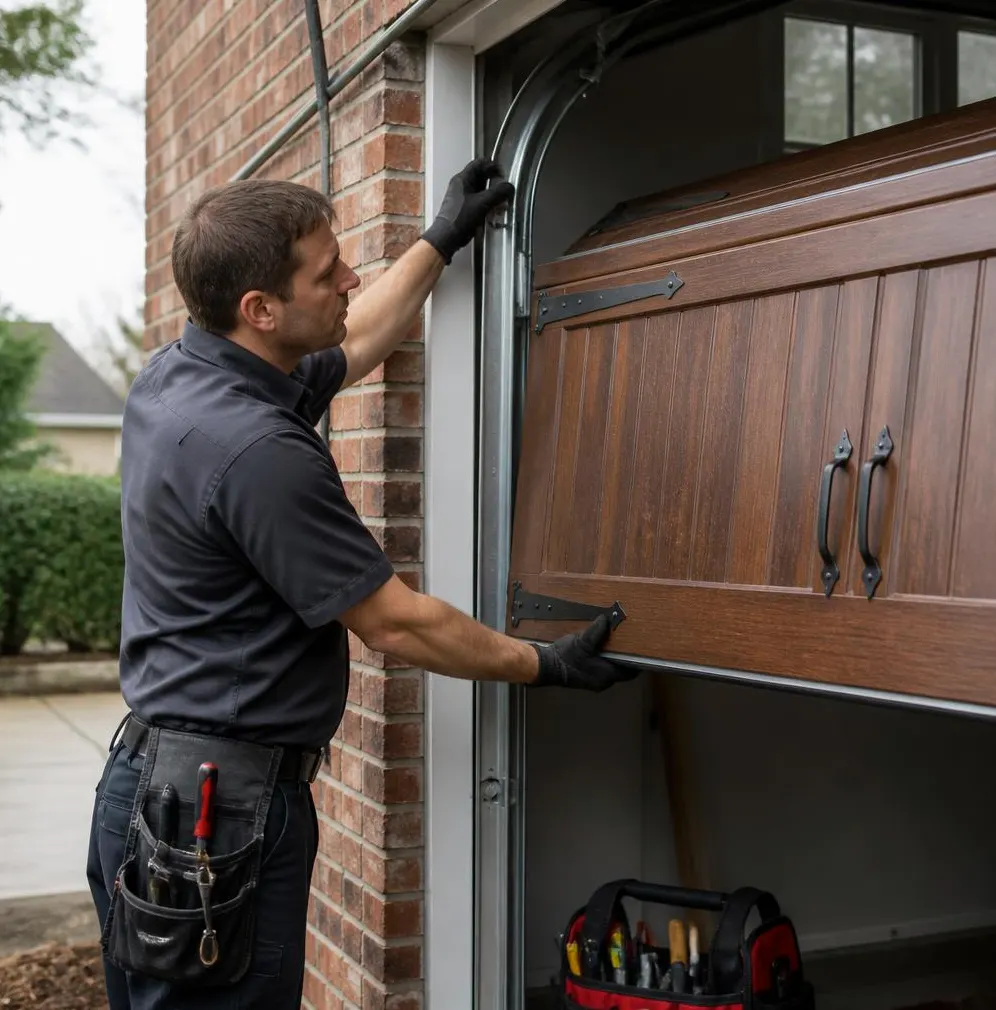
If you've pressed on the panel and it gives, if rust has gone past surface discoloration into pitting or holes, or if the door is dragging, binding, or no longer closing flush against the frame, it's time to get an opinion rather than keep debating it over dinner. We can take a look and tell you honestly whether it's a repair or a replacement conversation. Sometimes that means Cable & Roller Replacement if corroded hardware is the real culprit and the panels themselves are sound. Other times, especially with a wood-core door that's absorbed water for a season or two, a full Garage Door Installation with a more moisture-resistant panel makes more sense than patching a door that will keep swelling every time it rains.
If you're in Brandon, Riverview, Valrico, Seffner, Plant City, Lithia, or Dover and you're ready to settle the argument for good, call Brandon Garage Door Service. We'll give you a straight answer on what's cosmetic, what's structural, and what it'll take to fix it right before the next storm rolls through.